
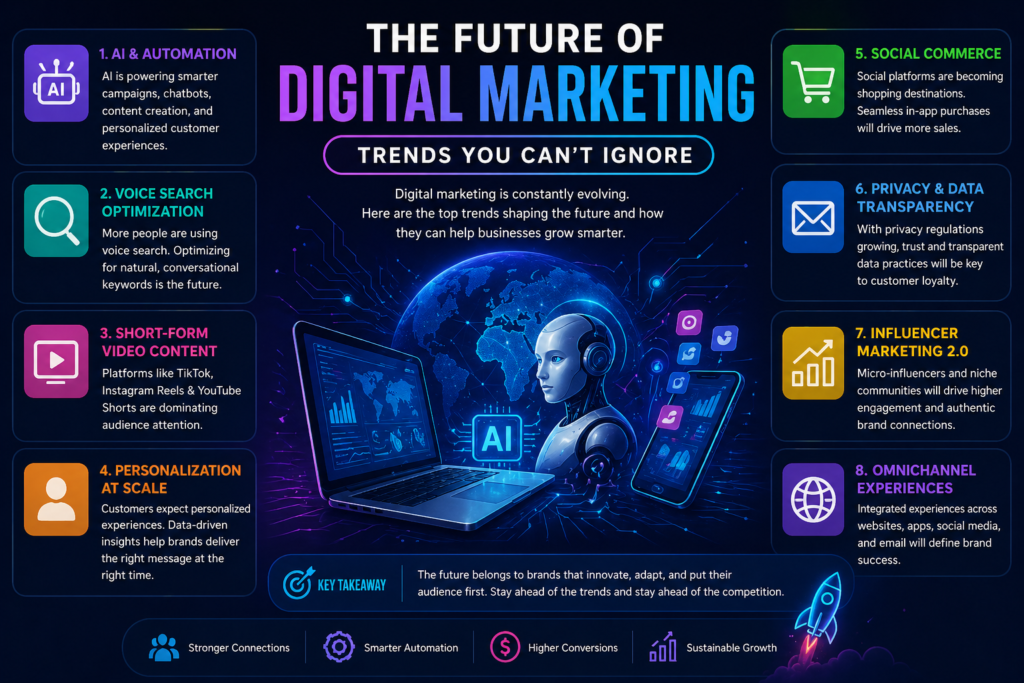
The future of digital marketing is being shaped by rapid technological advancements and a deeper understanding of consumer behavior, making it more dynamic and competitive than ever before. One of the most significant trends is the integration of artificial intelligence and automation, which allows businesses to analyze vast amounts of data, predict customer preferences, and deliver highly personalized content at the right time. At the same time, short-form video content has emerged as a dominant force, with platforms like Instagram Reels and YouTube Shorts capturing user attention quickly and driving higher engagement rates. Voice search is also transforming the way people interact with search engines, encouraging marketers to adopt more conversational and intent-based SEO strategies. Additionally, the importance of data privacy and transparency is growing, as consumers are becoming more aware of how their information is used, pushing brands to build trust through ethical practices and clear communication. Influencer marketing is evolving beyond celebrity endorsements, focusing more on micro-influencers who offer authentic connections with niche audiences. Social commerce is another powerful trend, turning social media platforms into full-fledged shopping experiences where users can discover and purchase products seamlessly. Furthermore, the rise of omnichannel marketing ensures that customers receive a consistent and integrated experience across websites, apps, social media, and email. As competition increases, businesses that embrace these trends, stay adaptable, and prioritize customer-centric strategies will not only survive but thrive in the ever-changing digital landscape.